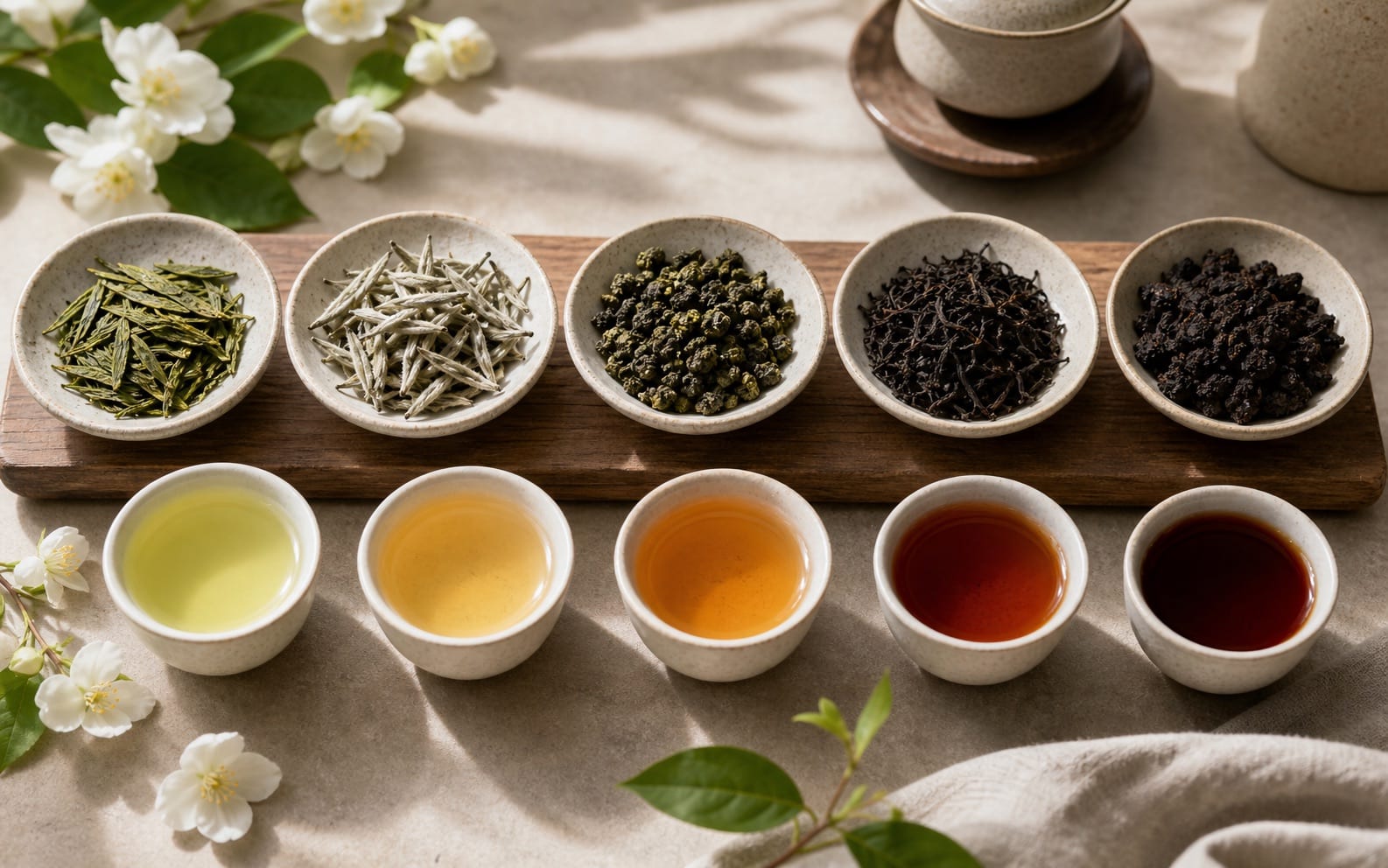
Chinese Tea Types: Green, White, Oolong, Black, and More
Compare the six main Chinese tea types by oxidation level, processing method, flavor, caffeine feel, and the best choice for your taste.
June 6, 2026
Chinese Tea Types: Green, White, Oolong, Black, and More
Chinese tea is usually grouped into six main types: green tea, white tea, yellow tea, oolong tea, black tea, and dark tea. The differences come from how the leaves are processed, especially how much oxidation or post-fermentation they receive.
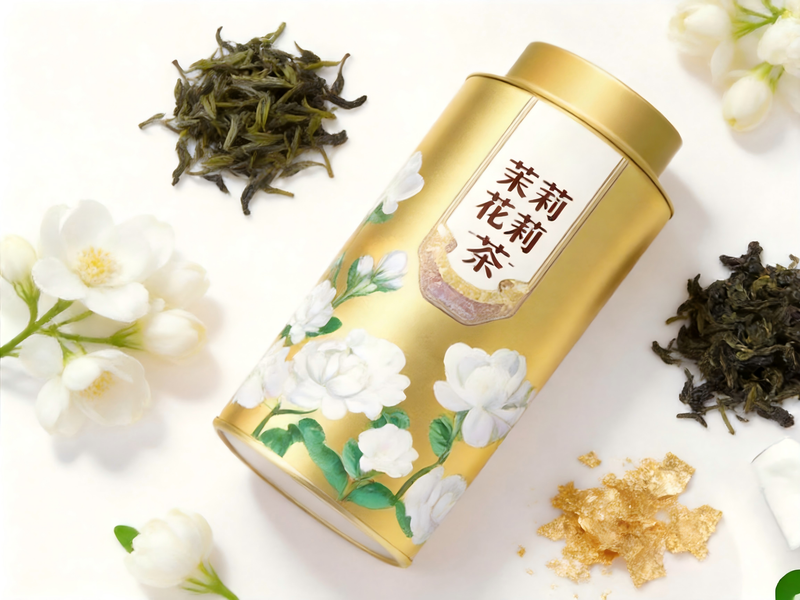
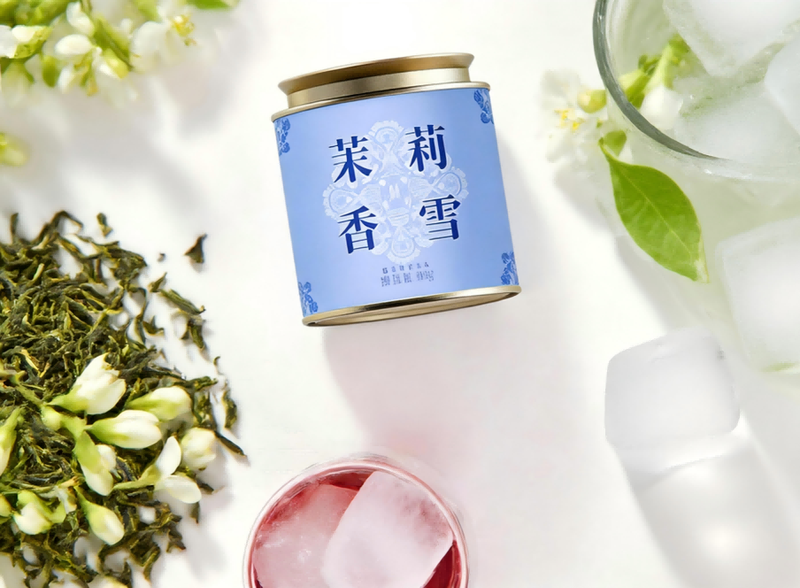
Understanding these tea types helps you choose the right tea for your taste, brewing style, and daily routine. Jasmine tea is most often made with green tea, which is why it tastes fresh, floral, and lightly brisk.
Chinese tea types at a glance
| Tea type | Processing style | Typical flavor | Good choice if you like |
|---|---|---|---|
| Green tea | Unoxidized, heat-fixed early | Fresh, grassy, chestnut-like, sometimes brisk | Light body, clean aroma, jasmine tea |
| White tea | Lightly withered and dried | Gentle, sweet, hay-like, floral | Soft flavor and easy brewing |
| Yellow tea | Lightly oxidized with a yellowing step | Mellow, smooth, less grassy than green tea | Rare teas with a gentle profile |
| Oolong tea | Partially oxidized | Floral, creamy, roasted, fruity, mineral | Aromatic teas with layers |
| Black tea | Fully oxidized | Sweet, malty, fruity, honey-like | Stronger tea, milk tea, breakfast-style cups |
| Dark tea | Post-fermented after processing | Earthy, woody, mellow, aged | Rich body and aged flavors |
Green tea
Green tea is heated soon after picking to stop oxidation. This keeps the leaves green and preserves a fresh taste. Chinese green teas can show notes of chestnut, bean, orchid, fresh grass, or sea breeze depending on the region and processing.
Jasmine tea commonly uses green tea as the base because the fresh leaf character pairs well with jasmine flowers. Green tea is sensitive to high heat, so it is usually best brewed below boiling.
White tea
White tea is minimally processed. The leaves are withered and dried with very little shaping. The result is soft, sweet, and gentle, often with floral or hay-like notes.
Young white tea can taste delicate, while aged white tea may develop deeper dried-fruit and herbal notes. White tea is a good option for drinkers who want a lighter cup without the sharper edge of some green teas.
Yellow tea
Yellow tea is rare compared with the other major Chinese tea types. It starts in a way similar to green tea, then goes through a controlled yellowing step that softens the green, grassy edge.
The flavor is usually mellow, round, and smooth. Because production is limited, yellow tea is less common in everyday tea shops.
Oolong tea
Oolong tea sits between green tea and black tea in oxidation level. It can be lightly floral, creamy and high-mountain in style, or roasted, mineral, and deeply aromatic.
Famous examples include Tieguanyin, Da Hong Pao, Phoenix Dancong, and Dong Ding oolong. Oolong is a strong choice for drinkers who enjoy fragrance and changing flavors across multiple infusions.
Black tea
In English, black tea refers to fully oxidized tea. In Chinese, this category is called hong cha, or red tea, because of the reddish liquor.
Black tea often tastes sweet, malty, fruity, or honey-like. It is more forgiving with hotter water than green tea and works well plain or with milk, depending on the style.
Dark tea
Dark tea is post-fermented, meaning the tea continues to transform after initial processing. Ripe Pu-erh and Liupao are well-known examples.
These teas can taste earthy, woody, mellow, and smooth. Many drinkers choose dark tea for its heavy body and aged character rather than fresh aroma.
Where does jasmine tea fit?
Jasmine tea is a scented tea, not one of the six processing categories by itself. Most jasmine tea is jasmine green tea: green tea leaves are scented with fresh jasmine blossoms until the tea absorbs the floral aroma.
That is why jasmine tea should be brewed more like green tea than black tea. Cooler water and shorter steeping protect the fragrance and reduce bitterness.
Which Chinese tea type should you try first?
If you like fresh and floral tea, start with jasmine green tea or another green tea. If you want a soft cup, try white tea. If you want aroma and complexity, try oolong. If you want a stronger everyday cup, try black tea. If you like aged, mellow flavors, try dark tea.
Related reading
- Learn the jasmine origin story: What Is Hengzhou Jasmine Tea?
- Brew jasmine tea correctly: How to Brew Jasmine Green Tea
- Compare iced and hot methods: Hot Brew vs Cold Brew Jasmine Tea
- Shop jasmine tea for everyday brewing: Original Jasmine Tea shop